The Best Time to Visit Thailand for Digital Nomads & Travelers
We’ve all been there. Bags are packed, you’re ready to go. You touch down in a new city, ready to see some of the local attractions. You’ve got your whole trip planned ahead of you.
But then…
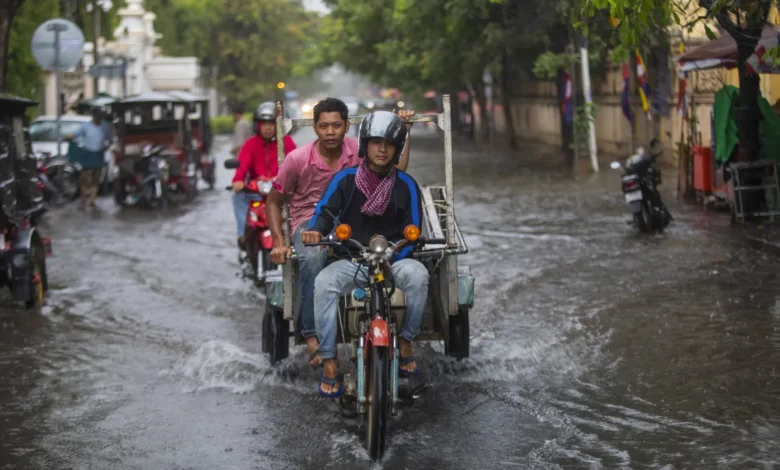
Bad weather throws all of that off.
Look, there’s not much you can do about this overall. If you’re destined for bad weather, it’s going to affect your game. Your only real measure of prevention is to take your trip at a time when the weather is usually more likely to cooperate.
Southeast Asian weather overall? A complete mess. Unpredictable. Miserable when it rains. Thailand is no exception.
So if you want to go to Thailand and have the best shot of enjoying the country, as well as the weather, you need to read this post. I’ll break down the best time to visit Thailand, the absolute worst, and the stuff that most generic travel guides completely skip over.
What’s the best time to visit Thailand?
The best time to visit is during the “cool” season, which also tends to be more mild weather-wise.
Generally speaking, this falls between November and February. You should go after the new year for an important reason, too: holidays and families. Many travelers forget that December in Thailand means packed beaches, inflated prices, and tourist crowds that make the good spots feel like Times Square on New Year’s Eve.
Plus, the prices will be slightly lower and the crowds more manageable after the New Year celebrations. Everybody goes to Thailand in November and December, but starting in January, things get a little bit better.
You’ll still have some days pushing above 30 degrees Celsius, but they’re tolerable. Far more pleasant than the scorching Bangkok heat in the summer (35-40C plus humidity that makes it feel like you’re breathing through a wet towel).
My personal sweet spot? January into early February. It’s the best weather-to-crowd-to-price ratio you’ll find anywhere in the Thailand calendar.
The worst time to go to Thailand is…
Definitely the rainy, monsoon season. This usually hits its absolute peak in the September and October timeframe, right before things get nice again.
Some Thais also classify this season as May through October, but coming out of the cool season, it’s a bit more pleasant and less rainy than the actual peak rain months.
The Burning Season: What Nobody Warns You About
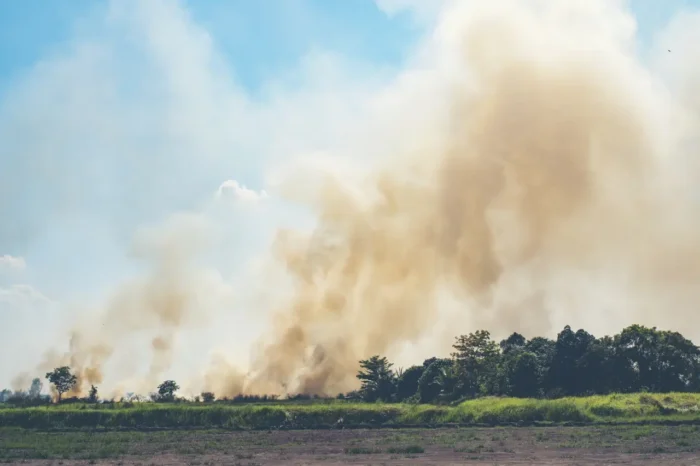
Many people prefer to run away from Thailand (or at least parts of it, like Chiang Mai) during the burning season. On some days, it can be so bad that you can’t really breathe properly because of the smoke in the air.
But the burning season usually affects the Northern parts of the country more than it does the southern, more touristy areas. It runs mostly from February through April. The worst of it is usually concentrated in late February and March, though some years it starts earlier or drags into April.
I’m not talking about a little campfire smell in the air. I’m talking about days where the air quality index regularly exceeds 200 µg/m³ of PM2.5, putting Chiang Mai in the “hazardous” bracket and, in bad years, making it one of the most polluted cities on the planet.
The mountains surrounding the city create a valley that traps the smoke from agricultural burning (farmers across northern Thailand and neighboring countries like Myanmar and Laos burn their fields to clear them) with zero escape route.
East Coast vs. West Coast Beaches
Thailand’s two coastlines do not share the same weather pattern. Not even close.
The west coast (Phuket, Krabi, Koh Lanta, the Phi Phi islands) runs on the Andaman Sea. Its dry season spans roughly November through April, which lines up with the cool season I recommended above.
The east coast (Koh Samui, Koh Phangan, Koh Tao) runs on the Gulf of Thailand and operates on a shifted calendar.
It’s generally dry from around December through August, but the monsoon season hits later: roughly September through November.
This means that when Phuket is getting battered in October, Koh Samui might be fine. And conversely, when everyone is flooding into Phuket in December, Koh Samui can actually be rainy.
The Hot Season and Songkran (March-May)
Before the monsoon shows up, Thailand goes through a hot season that runs from roughly March through May.
In Bangkok and central Thailand, this means temperatures regularly hitting 38 to 40 degrees Celsius with heavy humidity. In the north, add the burning season smoke on top of that and you have a really unpleasant combination.
It’s not all bad though. There’s one event during this period that I think is worth building a trip around if you’ve never experienced it: Songkran.
Songkran is Thailand’s New Year water festival, celebrated around April 13th each year. And when I say water festival, I mean an all-out, city-wide, days-long water fight where everyone from locals to grandmothers are carrying buckets and water guns in the street.
It’s chaotic, but also one of the most fun things you can experience in Southeast Asia.
If you’re going, plan well ahead and embrace the chaos rather than fight it. But if crowds and disruption aren’t your thing, consider it a good reason to skip late April entirely.
Thailand’s bad weather
Let’s get one thing out of the way first.
It’s never perfect in Thailand.
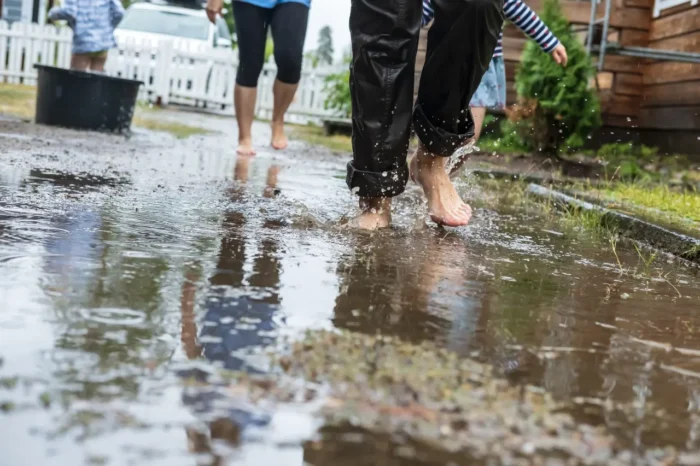
If you’re going for more than a week, more than likely you’re going to see rain at one point or another.
However, hopefully it’ll just be for a few hours in the afternoon, and then will clear up. It’s somewhat similar to the weather in Florida, for those of you who have been there.
Meaning you’ll have a random downpour in the afternoon, it’ll be humid like crazy, and then you just go on with your day.
There is a huge difference though, between the situation I described above and a monsoon.
When I say that, I mean the kind of storms that bring already-horrible Bangkok traffic to a complete and utter standstill. We’re talking roads being reduced to pure mud, barely able to go outside kind of weather…. This is never nice, but it’s part of the deal.
Look, I don’t want to sound like it’s impossible to enjoy Thailand during the bad season.
As I’ve mentioned before, if you have a tight game and the right attitude, the sky is the limit for you with Thai women. And the same goes for the beautiful attractions and places to visit.
Don’t let the weather ruin your trip if it comes to it. At the same time… it doesn’t hurt to plan around it and go when the weather is usually better, in order to improve the rain-to-full sun ratio.
The sweet spot remains November through February, with January being the single best individual month in my view. Go after the new year crowds clear out, enjoy the cool and dry weather, and you’re working with the best conditions Thailand can offer.
Good luck!